Wednesday, May 1, 2019

13th a documentary


Movie: 13th
Year: 2016
Directed by: Ava DuVernay
Produced by : Howard Barish, Ava DuVernay, and Spencer Averick
Trailer: 13TH Trailer (2016) Netflix Documentary
Netflix13th
Running time: 100 minutes


Synopsis

13th is a documentary about how the Thirteenth Amendment led to mass incarceration in the United States. The film shows how American politics, racism, capitalism, and policies have influenced the modern American prison industrial complex.

What is the Thirteenth Amendment: 

The 13th amendment was initially to abolish slavery and involuntary servitude when it was ratified in 1865. It created this loophole to for everyone except for those who are deemed as criminal. Thus this amendment paved the way to the modern incarceration system according to Ms. Alexander, who gave her perspective in the documentary.


Topics focused on in the documentary: 

The economic and sociological history of slavery was examined closely looking at The rise of Jim Crow law to enforce racial segregation in the Southern United States was also used as a way to keep the labor in the south cheap. The idea of abolishing slavery created an economic threat to those who owned plantations in the south. The American civil rights movement was also examined in the film before moving on to  Richard Nixon's southern strategy in which the Republican Party devised a plan to increase the parties political support among white voters in the South by appealing to racism against African Americans.  The film later talks about how the war on drugs that was introduced during the Nixon administration which increased the American prison population with the majority of the people being incarcerated are black males. The film also looks at  "over-incarceration" which has destroyed generations of black and minority families and their kids as well as ruined their chances of a good job and an opportunity to participate in civic duties such as voting. DuVernay also decided to end the documentary with graphic videos of fatal shootings of African Americans by police.


Quotes from the film: 

“The United States is home to 5% of the world’s population, but 25% of the world’s prisoners. Think about that.”-Barack Obama

“Justice too long delayed is justice denied”- Martin Luther King

“There are thousands of people in jails right this moment that are sitting there for no other reason than because they’re too poor to get out.” – Michelle Alexander


Facts about the American prison system

The National Research Council explained that half of the 222% growth in the state prison population between 1980 and 2010 was due to the increase of time served in prison for all offenses. 


 African Americans are more likely than white Americans to be arrested; once arrested, they are more likely to be convicted; and once convicted, they are more likely to face rigorous sentences


Why I think you should see it:

The film gives a good overview of historical and current America in regards to the american politics and incarceration. 

Thursday, April 25, 2019

Street Art: San Francisco,Seattle and NYC


This week's assignment "Street Art" made me think about how there is so much art on buildings that we pass by that we never stop to acknowledge. These past few weeks I have been in San Francisco, Seattle and  NYC.


San Francisco 


Found in North Beach 


Seattle 

On a side of a house in Ballard 


NYC 


Near the Highline 

Friday, April 19, 2019

Shedding Light on Black Holes: Girls, Women, and STEM


1. Unesco estimates over 160 million girls worldwide are not educated due to refugee status, war relocation, poverty, and gender preference. What would the world look like if all girls were educated? What do you think would change?

I am not surprised that UNESCO estimates that  160 million girls worldwide are not educated. There are girls all around the world (including the United States) that do not have the opportunity or access to a proper education.  I do think that the world would be a much different place if all girls were educated.


We need to remember that when girls become educated…

  • They tend to delay the process of getting married and having children.
    • A child born to a literate mother is 50% more likely to survive past the age of 5. (UNESCO, 2018)
    • In underdeveloped countries, one in every three girls is married before reaching the age of 18  (United Nations Population Fund)
  • Girls and women are less likely to be victims of domestic and sexual violence or to tolerate it in their family  if they have been educated about what is happening and what their rights are;
  • In certain parts of the world  families often choose to send their daughters to work instead of school to help support their family
    • A girl with an extra year of education can earn 20% more as an adult. (The World Bank)
    • This does not just empower her but also can empower the economy she is a part of
  • Girls who are uneducated are more susceptible to getting sexually transmitted diseases, having an unplanned pregnancy and experiencing other health complications.
    • The #1 cause of death for girls 15-19 is childbirth. (World Health Organization, 2018 )


2. Do you think social media has played a role in assisting with elevating the role of women in science? For Malala’s cause? For the women of Hidden Figures? For Katie Bouman and the black hole photograph?

I think that Social media has been a  factor in spreading the message that women can and are powerful and successful since  it gives everyone and anyone ( with access to it) an equal chance to post, share and make comments, By positively spreading light through articles and images online more people are able to see that women doing amazing things. Thus it reinforces to others that they too can make a difference in the world. Movies such as Hidden Figures shows the audience the struggle that women have faced and continue to meet in male-dominated careers. Malala uses her voice to create a dialogue around education. Even at a young age, she understood how important it was to talk to people, give interviews  (even under a false name if needed to protect an identity) so that people can understand what is going on in a society that is under the Taliban. Her story was shared by millions on social media and made more people aware of what is going on under Taliban control. Katie Bouman and the black hole photograph was all over social media and showed the world that women have been involved in STEM and deserve the recognition for their efforts. 


3. Which women scientists would you like to see receive more recognition?

Image result for Rita Levi-MontalciniI think that Rita Levi-Montalcini (1919-2012)  should be known more outside of the neurobiology and oncology sphere. At the time of her death, she was the oldest living Nobel laureate as well as the first Nobel Prize winner to live to 100. Rita faced many limitations during her career from fascism and anti-Semitic laws that were present both pre and during WWII. During World War II she chose to stay in Italy and create a makeshift laboratory in her home so she could continue her work which later helped her a colleague discovered nerve growth factor. This protein regulates the growth of cells and plays a vital role in the development of tumors. 

4. What is the key to encouraging more girls to study the sciences? Why is this important?

The amazing thing about science is that it is very versatile. I believe that ( STEM) Science, Technology, Engineering, and Mathematics,  should be emphasized in school from a young age but in a way that inspires the student and makes them excited. I do think that society needs to disregard the stereotypes that math and science are only for boys. I think that we should encourage everyone to become interested in STEM.

In high school, I was the president of my schools IGNITE (Inspiring Girls Now In Technology Evolution)  chapter. The mission of Ignite was to create opportunities to spark girls’ ( and now includes Self-identifying girls and non-binary students ) excitement about technology careers and inspire them to explore new possibilities. During my time at school, this club allowed me the chance to attend multiple panel discussions, field trips, and meet women who were working in the STEM field. I hope that someday everyone will have the chance to learn more about STEM in an open and inclusive environment. 


Links 
A Conversation with Rita Levi-Montalcini | Video
Hidden Figures
I Am Malala: The Girl Who Stood Up for Education
Meet Dr. Katie Bouman, the 29-Year-Old Behind the Black Hole Image| Video

Wednesday, April 10, 2019

Immigration Waves: Photography and Family


The topic of immigration is currently a big discussion in United States political sphere with many people being apathetic about families being torn apart and pushing for harder immigration policies. Artists choose their medium and then use it as a way to give their interpretation about what is going on and to provoke emotion and curiosity of the spectator.

ot-jr2.jpg
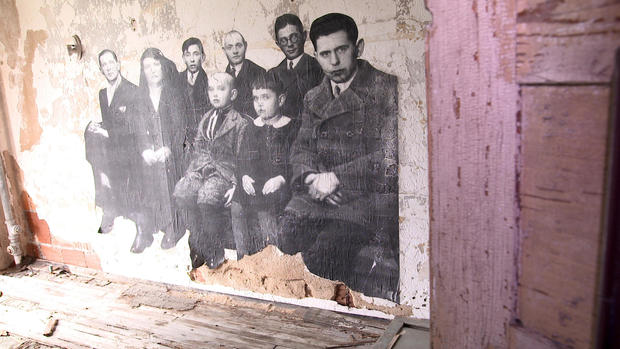
Photos in JR's exhibition in Ellis Island

In 2015, TedPrize winning artist JR created a photography installation at  New York's Ellis Island in regards to immigration. He showed the world the stories of the people who went through Ellis Island. His photography exhibit also reminded me of Shimon Attie's Berlin exhibit The Writing on the Wall in which Attie projected pre-World War II photographs of Jewish street life in Berlin onto the same or nearby addresses.


Image result for writing on the wall shimon attie
Shimon Attie The Writing on the Wall 
 JR  said "Everyone wants to have a better life and to give their children a better life than theirs. That resonates with people around the world. "Most of my family history has to do with leaving Europe The Soviet Union, (USSR) due to Antisemitism and that by coming west they would experience a better life just as JR said in regards to his installation.  For some members of my Family, this was pre-world war one, and for others, it was pre and post WWII.

Tillie and Israel (The parents of my grandmother on my mother's side) escaped from Aulonov, Russia in 1920. They went by horse to Romania, from there to Antwerp and then to Liverpool England eventually the boarded a ship to Halifax Canada. They left Russia due to the horrible Antisemitism they encountered. Tillie was a maid for her step mother’s sister, according to Bobbie ( my grandmother Lillian) since the stepmother didn’t want her around. The aunt and her children, all except one son, wanted to leave Russia. So Israel went in the brother’s place. My great grandparents were married in Winnipeg in 1921. They went to Winnipeg since the aunt's husband was already there and had sent the tickets. In Russia, Israel was a grain merchant. When he first went to Winnipeg, he was a junk merchant trying to make as much as he could until he met someone who taught him to be a baker. He later went on to own his bakery with a partner, but according to my grandmother, the partner stole all the money, so they went bankrupt. He later worked for a large bread baking company where he died in 1942 in an "industrial accident" which we are not sure if it was an accident or if he was pushed as an act of antisemitism.


On my father's side, there was some absence when it came to the Holocaust and the European front. Growing up I did not know much about my grandfather because he died while I was 12. At 13, the age of my Bat mitzvah, I started to become interested in the Holocaust and my relationship because I was required to read the Diary of Anne Frank. I never really got to ask him many questions about his past.  My grandfather himself had already been in the United States pre- World War Two but most of his family was from Lithuania and Poland and thus perished at the hands of the Nazis.

Instead of having the usual high school graduation trip (or even walking at my graduation) I ended up in Lithuania to see where my family came from. Darbenai is in the Kretinga district of Lithuania, north of the resort town Palanga and just a few miles from the Baltic coast. According to the locals,  just before WWII most of the 708  residents were Jews. While driving through Lithuania, we stopped to try and talk to some locals to find out where the synagogue was and the cemetery, whether maybe that they had heard stories about my family or knew of someone who lived in the town. All of a sudden this drunk guy hops into our minivan and tells us where to drive and that he will be out translator since the "old man doesn't speak English." Once we arrived and knocked on the door, this 4 foot 11, toothless man came out. Throughout the translations, we learned that he was the current groundskeeper of the old Jewish cemetery and that he knows where all of the mass graves of the Jews are located. He also told us that many people don't know about these mass graves and that in the last five years we were the first to want to see it and to even take interest in this area. We got into the car, and we drove for 10 minutes into this forested area, and then hiked through it for another 30.  Along the way, he told us stories of the Jews and the takeover of Poland by the Nazis and about his life, under Nazi rule and Soviet rule. He even showed us some photographs. Seeing where my family was from in Lithuania really put into perspective this idea that everyone has some form of story in regards to immigration.


More information on JR's Art:
Artist's hidden message on Ellis Island| 60 Minutes | Video
Gallery: Why the stories of Ellis Island matter today


More information on Shimon Attie:
Shimon Attie


Thursday, April 4, 2019

Final: Sustainable Fashion


For my final, I would like to look at Sustainable Fashion. I will be dividing my final into three blog posts that will incorporate different forms of media.

My first blog post would be me discussing how I define sustainable fashion, the inventors of the field and the current statistics regarding the use of water pollution from dyeing and other ecological effects from the textile industry.

My second blog post would be about What is recycled fashion and how is this important?  I want to look at how retailers are reusing recycled items and reselling them stores that have done this include HM, Uniqlo, Madewell’s Denim Donation Program or Eileen Fisher’s Renew line. Other stores have specific lines in addition to there product that is made specifically with eco-friendly materials such as Target’s eco-friendly clothing line.


My third blog post would be discussing some of the innovative proposals people have made as well as startup companies that are trying to incorporate more sustainable materials.

Friday, March 29, 2019

Book Review: Becoming


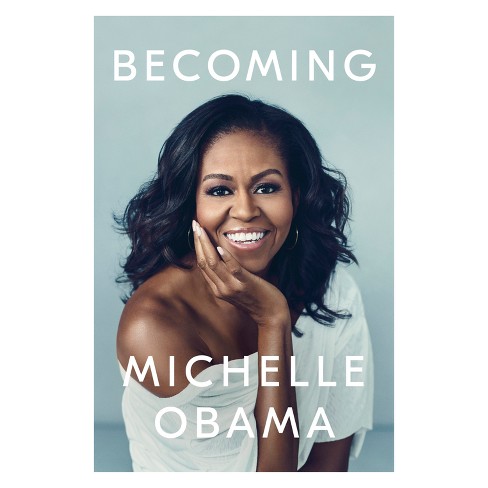
Image result for michelle obama becoming

Authors:Michelle Obama 
Published: November 13, 2018
Publisher: Crown Publishing Group 


Becoming Michelle is Michelle LaVaughn Robinson Obama's autobiography about her life. The book's chapters (including a preface and epilogue) are divided into three sections: Becoming Me, Becoming Us, and Becoming More. Becoming Me follows Obama's life growing up with her family on the South Side of Chicago,  her education at both Princeton University and  Harvard Law School,  then moves on to discuss her early career as a lawyer at the law firm Sidley Austin. This is the section where she first meets Barack Obama since he was a summer associate at the firm. Becoming Us focuses on the marriage between the two,  the birth of their children, the beginning of his political career in the Illinois State Senate and ends with his first Presidential election in 2008. The final section titled Becoming More describes their life and challenges being the First African American family in The White House.


Not only is Michelle the first African American First Lady but she is also the First ever to have obtained degrees from two Ivy League schools (Princeton University and Harvard Law School. )In this book, she discusses the challenges of being both African American and a female at both Princeton University and  Harvard Law School. I think that it  is really important that she mentions her own struggles with school and exams such as how she failed The Bar exam (154. ) Overall while reading this, you can tell how much she values her education and the education of others. 


In her writing, she is also brutally honest about living in the White House as a First Lady and as a mother of two young girls. She makes the reader realize that though its an honor being part of the First Family and it comes with many incentives, it is not always amazing and wonderful since she is always under the public eye. She talks about how there is no rule book about being the first lady and that it is a live and learn experience. She also describes how she was trying to raise two daughters with some form of normalcy while still trying to remain in her important role.


Some themes in the book:

Normalcy is a theme that was incredible present in the second half of the book once she and Barack were put into the public spotlight as he became senator and president. As Barack became a senator, they were under the public eye but still able to do normal stuff such as the kids going to birthday parties and attending swimming class. They brought the girls on the campaign trail but still tried to maintain normalcy such as the girls getting their face painted while on the campaign trail ( page 243) which is something most kids would have had done at their age. Later, the Family came to realize that under the public eye as a presidential family they can no longer be spontaneous about doing stuff because of the threats to there security and that being "normal" was even harder but Michelle still made the girls do chores around the White House. 


Michelle also lost her best friend Suzanne. She wrote “In the span of a year, I’d gained Barack and lost Suzanne, and the power of those two things together left me spinning. Suzanne’s death had awakened me to the idea that I wanted more joy and meaning in my life. I couldn’t continue to live with my own complacency.” (page 133) This quote shows that even though she has experienced loss, she was able to use it as a way to reassess her life and find the love of her life.  Later, Her father Fraser C. Robinson III,  who had multiple sclerosis eventually died after suffering a heart attack related to M.S. His illness took a toll on her emotionally because it was hard to see what was happening to him and she wanted to try and help him even when he did not want her help. 


Celebrityhood:


Michelle Obama is a celebrity because she is the first African American First Lady. She used this status to voice her opinions on many different causes as well as to become a fashion icon. Michelle wanted as the first lady wanted to fight obesity for both children and adults but was then told to narrow her idea so that she could better tackle it during the presidency and thus only focused on childhood obesity through her Let’s move public health campaign. She also took it upon her to help military families both currently serving and those who were veterans, and as part of this, she used status as First Lady to reach out to CEOs to have them try and  hire those who were veterans and military spouses more and better understand what being a veteran or military spouse means. 


Favorite quotes:


Quote: "Your story is what you have, what you will always have. It is something to own." (page xi.)


Why I like it: She loses a lot of things her life such as friends, family and being able to do the most basic tasks because of the public eye and security details but she gains a lot of good things in her life too such as Barack, her children and the ability to make a positive change in the society.  


Quote: "Am I good enough? Yes, in fact, I am."- (page 92)


Why I like it:This quote might be super small and for some might be considered a little cliche. For me, this quote shows that even the First lady of the United States, a successful woman also has those days where she questions herself.


Quote: So many of us go through life with our stories hidden, feeling ashamed or afraid when our whole truth doesn’t live up to some established ideal"- (Page 415)


Why I like it: I agree that society does put pressure on people to fit into a so-called narrative or ideal and thus people do not always own up to their own story. Society also creates this idea of “normalcy” and if you do something even if its true to yourself outside of this box it will be rejected.


More about Michelle Obama:


Friday, March 1, 2019

Book Review: I am Malala: The Story of the Girl Who Stood Up for Education and was Shot by the Taliban


Authors: Malala Yousafzai and co-written with Christina Lamb.
Publisher: Weidenfeld & Nicolson (UK) and Little, Brown ,and Company (US)

Publication date: October 8, 2013


In her autobiography, I Am Malala: The Girl Who Stood Up for Education and Was Shot by the Taliban, Malala Yousafzai tells not only her own story but also about others who stood up in their own way for education and against oppression.  She tells about her account of growing up in Swat in her beloved homeland of Pakistan before it was taken over by the Taliban and then discusses the life outside of Pakistan after the incident. Malala was named after Malalai of Maiwand a famous Pashtun warrior woman from southern Afghanistan who fought for freedom against the British.

Her father is a well-educated man who owns a school and is an activist for education.  Her parents allowed her to watch Bollywood movies, read what would be considered "western" books and watch American shows like Ugly Betty. Her parents also allowed her to play on the rooftops of the village with others which reminded me of my childhood.  Even at a young age she understood the importance of education and admired her female teacher.

On October 9, 2012, a Taliban soldier shot Malala and two other girls when they were traveling home from school on a bus. This was just after Malala had taken some exams for school.  Yousafzai was shot with one bullet, which went from the side of her left eye through her neck and landed in her shoulder (PAGE 144 ). Her name was on a Taliban kill list that was listed on Google which her father found before the attack on her. The shooting left Malala in critical condition.  She was flown to a military hospital in Peshawar to receive better medical care. While in Peshawar a portion of her skull was removed due to the swelling of her brain that had been impacted near her eye. To receive more care, she was transferred to a hospital in Birmingham, England. Though she would require multiple surgeries and a long recovery she emphasizes that she is lucky that she did not have any permanent brain damage.

In the time since her recovery, she has continued schooling in Britain and is now on her way to getting a bachelor's degree. Going to college is a milestone for many and to go to college after what she has experienced is even more of an accomplishment since she is again showing her commitment and how much she values education. Many people (including myself) complain how much we hate having early classes and sometimes forget how lucky we are that we have the chance to attend school at all.  

This book changes the idea of "celebrityhood" since Malala is considered a celebrity based on what has happened to her, her response of never giving up and creating this global discussion around the issue of girls’ education. She has continued to help bring out the idea of universal education, especially in regards to girls in non-Western countries. Malala is getting fame and recognition not because she is seeking the individual status but because she understands that using her voice is the only way to make a change and create a dialogue around education. Even at a young age, she understood how important it was to talk to people, give interviews  (even under a false name if needed to protect an identity) so that people can understand what is going on in a society that is under the Taliban.

Some themes in the book that have to do with social change:

The theme of gender roles is interesting to look at in this book. From this reading and from prior knowledge one can understand that women are not treated equally to their male counterparts.  She writes at the beginning of the book “I was a girl in a land where rifles are fired in celebration of a son, while daughters are hidden away behind a curtain, their role in life simply to prepare food and give birth to children”(Page 18). This militant group present in Pakistan, The Taliban seeks to isolate, control, and terrorize women via oppressing them by not allowing the same amount of freedom, such as using their voice and having an education. Women are not allowed to walk around without fully being covered and without a male escort which is another form of oppression. Because Malala is a young girl fighting for her rights to be educated, she is slowly changing her local society and their view on gender roles, but now that she has spoken out internationally she has created a dialogue internationally about women's rights and gender roles.

Western society’s love of violence has helped to push this narrative to an American audience because if she wasn’t shot, then the media might not have paid as much attention to this issue, in favor of issues pertaining to more importance to American society.

The idea of having a voice and using it is predominant in this book. Her father encouraged her to get her education and for her continuous advocacy for education specifically the education of women is brave for a survivor such as herself who is still threatened today for speaking out. At a young age she started  journaling  about what life was like under the Taliban for the BBC after a journalist asked her father about young people who might be willing to give their perspective on life under the Taliban.  Her name used was a pseudonym. The name “ Gul Makai, which means ‘cornflower’ and is the name of the heroine in a Pashtun folk story” ( page 77.)

Are women free in the west was an interesting topic that was brought up in regards to her love of Ugly betty. She discusses that “In some ways, I decided women are showpieces in american society, too” (Page 86). This struck me as interesting since in both societies women are both seen as a service to the opposite gender. It goes into this idea of gender roles in a society, one that is considers “free” and the other considered “oppressed,” as well as what constitutes western ideals vs non western ideals. Even though America prides the idea of freedom for all this brings back the discussion if it really is.  

Negative Impact of the book:

In 2015, the All Pakistan Private Schools Federation (APPSF) banned I Am Malala in all Pakistani private institutions, and the president Mirza Kashif Ali released a book I Am Not Malala. Malala's opposition to Taliban policy makes her a target  among Taliban sympathisers and those in Pakistan who are part of ISIS and also don't believe in women having a voice. The Pakistani Taliban released a statement threatening to kill her and her family as well as target book shops which sell the books or people who are buying them.

Positive impact:

In today's Western society it’s unlikely that girls be excluded from education because we have child protective services and laws. Malala and her story are representative of education freedom and the book delivers a message to the world. Education considered a right for many can be used as a mechanism for oppression for others.  This book made more people aware of what is happening under oppressive regimes to women like the Taliban (and now Daesh). Malala has used her newfound fame to continue to help children (especially girls) receive this chance of an education.


Favorite quotes:


Quote:
“I sat on the rocks and thought about the fact that across the water were lands where women were free. In Pakistan we had had a woman prime minister and in Islamabad I had met those impressive working women, yet the fact was that we were a country where almost all the women depend entirely on men. My headmistress Maryam was a strong educated woman, but in our society she could not live on her own and come to work. She had to be living with a husband, brother or parents. In Pakistan when women say they want independence, people think this means we don’t want to obey our fathers, brothers or husbands. But it does not mean that. It means we want to make decisions for ourselves. We want to be free to go to school or to go to work. Nowhere is it written in the Quran that a woman should be dependent on a man. The word has not come down from the heavens to tell us that every woman should listen to a man.” (page 219. )

Why I like it:

First of all I find it really interesting that Pakistan has a woman prime minister especially since its nation with distinct gender roles. Malala brings up the idea of the Quran in her wish which is really important when reading to understand that religion plays both a key role in gender norms for women there, the Taliban use it as a means of coercion for daily life. The headmistress Maryam’s example in the quote really shows that you can be an educated woman but still have to have some dependence on a man.In a sense, this quote discusses that just because a female wants to make her own decisions in life does not necessarily correlate that she's being disobedient or trying to disrespect her culture and society. There are certain authoritative positions that are in important in society but individuals should have a degree of freedom to express themselves and their opinions.

Quote:
Malala write, "Peace in every home, every street, every village, every country - this is my dream. Education for every boy and every girl in the world. To sit down on a chair and read my books with all my friends at school is my right. To see each and every human being with a smile of happiness is my wish" - Page. 313

Why I like it: I  like this dream of hers because it is something that I truly care about as well. I want to see the world have some sort of peace and would love to be able to see everyone have the equal opportunity for an education. I think the imagery of reading this and seeing her sit down with friends at school reading is very beautiful and something that a lot of people take for granted.


Quote:
“I want to learn and be trained well with the weapon of knowledge. Then I will be able to fight more effectively for my cause.”-  Epilogue

Why I like it: I think that knowledge that is produced by having an education is important and can make you better understand the world around.


We need to remember that when girls become educated…


  • They tend to delay the process of getting married and having children.
    • A child born to a literate mother is 50% more likely to survive past the age of 5. (UNESCO, 2018)
    • In underdeveloped countries, one in every three girls is married before reaching the age of 18  (United Nations Population Fund)
  • Girls and women are less likely to be victims of domestic and sexual violence or to tolerate it in their family  if they have been educated about what is happening and what their rights are;
  • In certain parts of the the world  families often choose to send their daughters to work instead of school to help support their family
    • A girl with an extra year of education can earn 20% more as an adult. (The World Bank)
    • This does not just empower her but also can empower the economy she is a part of
  • Girls who are uneducated are more susceptible to getting sexually transmitted diseases, having an unplanned pregnancy and experiencing other health complications.
    • The #1 cause of death for girls 15-19 is childbirth. (World Health Organization, 2018 )


More about Malala, her work, and her Family